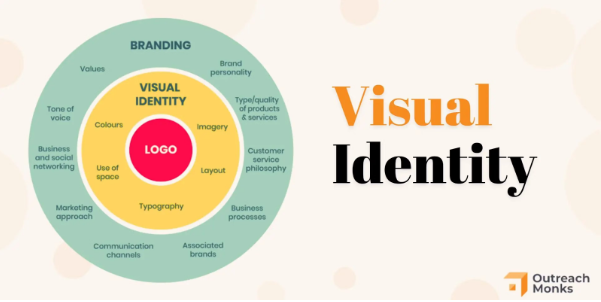

The digital world is very competitive, and visuals are better communicators than verbal communications. Your brand’s appearance is perceived by the user before they read what you post and comprehend what you provide. Logos, colors, typography, and style of design will instantly make an impression on visual identity, forming perception. A clear visual identity assists the brands to create recognition, credibility, and the capacity to ascend further in the ranking in the online space.
The Psychology Behind Visual Branding
Pictorial images affect human behavior and emotion. Color, shape, and pattern of design invoke subconscious reactions that influence an individual’s attitude towards a brand. An intelligent visual identity employs this psychology to deliver the appropriate message immediately.
Effective visual branding helps to:
- Create emotional responses
- Communicate professionalism and quality
- Establish trust at first glance
- Influence purchasing decisions
In case a brand’s imagery truly reflects its values, that would not only visually strengthen the overall communication of the brand but also clarify and facilitate the memory of the message. A consistency like this would generate faith and an emotional bond, hence making the audience connect with the brand more and for a longer time.
How Design Communicates Brand Personality
Each brand possesses a personality, and the expression of the personality is called visual identity. The use of fonts, colors, and imageries determine whether a brand is bold, modern, friendly, or authoritative.
Visual identity expresses personality by:
- Setting the tone of communication
- Reflecting brand values
- Making the brand relatable
- Creating a recognizable style
Perception is enhanced through a clear brand personality, thus making the brand more memorable.
Why Visual Consistency Strengthens Brand Recall
A condition for getting recognition is consistency. Regular viewers of the same visual elements may gradually link them to a brand. The user may get confused by mixed-up pictures and, as a result, lose the trust he/she/it has in the brand.
Consistent visuals help to:
- Improve brand recognition
- Build long-term trust
- Strengthen audience familiarity
- Support marketing campaigns
Platform consistency has helped brands to raise their profile higher by remaining top of mind.
Visual Identity as a Competitive Advantage
Visual identity can be one of the points of difference in the situations of crowded markets. Although the products and services can be similar, a distinctive design will make a brand immediately distinguishable.
Strong visual identity creates an advantage by:
- Making the brand instantly recognizable
- Separating it from competitors
- Increasing perceived value
- Enhancing customer confidence
Distinctive visuals help capture attention in busy digital spaces.
User Experience and Visual Design Connection
The visual identity has a direct influence on user experience. No clutter, clear fonts, and striking harmonies allow easier content consumption and make browsing more pleasant to browse.
Good visual design improves:
- Website navigation
- Content readability
- User engagement
- Time spent on site
Good user experiences also bring about improved engagement metrics, which aid in escalating brands up the ranks in search engines.
The Effect of Visual Identity on Internet Development
Graphical identity contributes significantly to online development. When content is engaging with a visual, the user will be more inclined to share the content, subscribe to the brand, and visit it in the future.
Visual identity supports growth by:
- Increasing social media engagement
- Improving content shareability
- Enhancing brand credibility
- Supporting long-term digital marketing efforts
These factors collectively improve online presence and reach.
Maintaining a Unified Visual Presence Online
Visual identity must be harmonized in all digital channels in order to be maximized. Unified appearance builds credibility and enhances brand communication.
Key platforms to maintain visual consistency:
- Websites and landing pages
- Social media profiles
- Email marketing campaigns
- Digital advertisements
Cohesive graphics in the visuals guarantee brand perception and understanding throughout the point of interaction between the consumer and the brand.
Conclusion
Design is not the only thing that defines visual identity, but an instrument of strategy that creates a perception and behavior. Since there is an emotional connection to brand recognition, good pictures leave long-lasting impressions. The good thing about a business that invests in a consistent visual identity is that it will be able to climb higher in visibility and, therefore, survive the online market competition easily.
By continually aligning their design with the company’s values, they will be able to gain trust, increase their visibility, and even have the chance to grow sustainably.